The 10 most expensive fossils, meteorites and space objects
Ten verified auction records for meteorites, Moon rock and spaceflown hardware, from a 25kg piece of Mars to the pen that got Apollo 11 off the lunar surface.
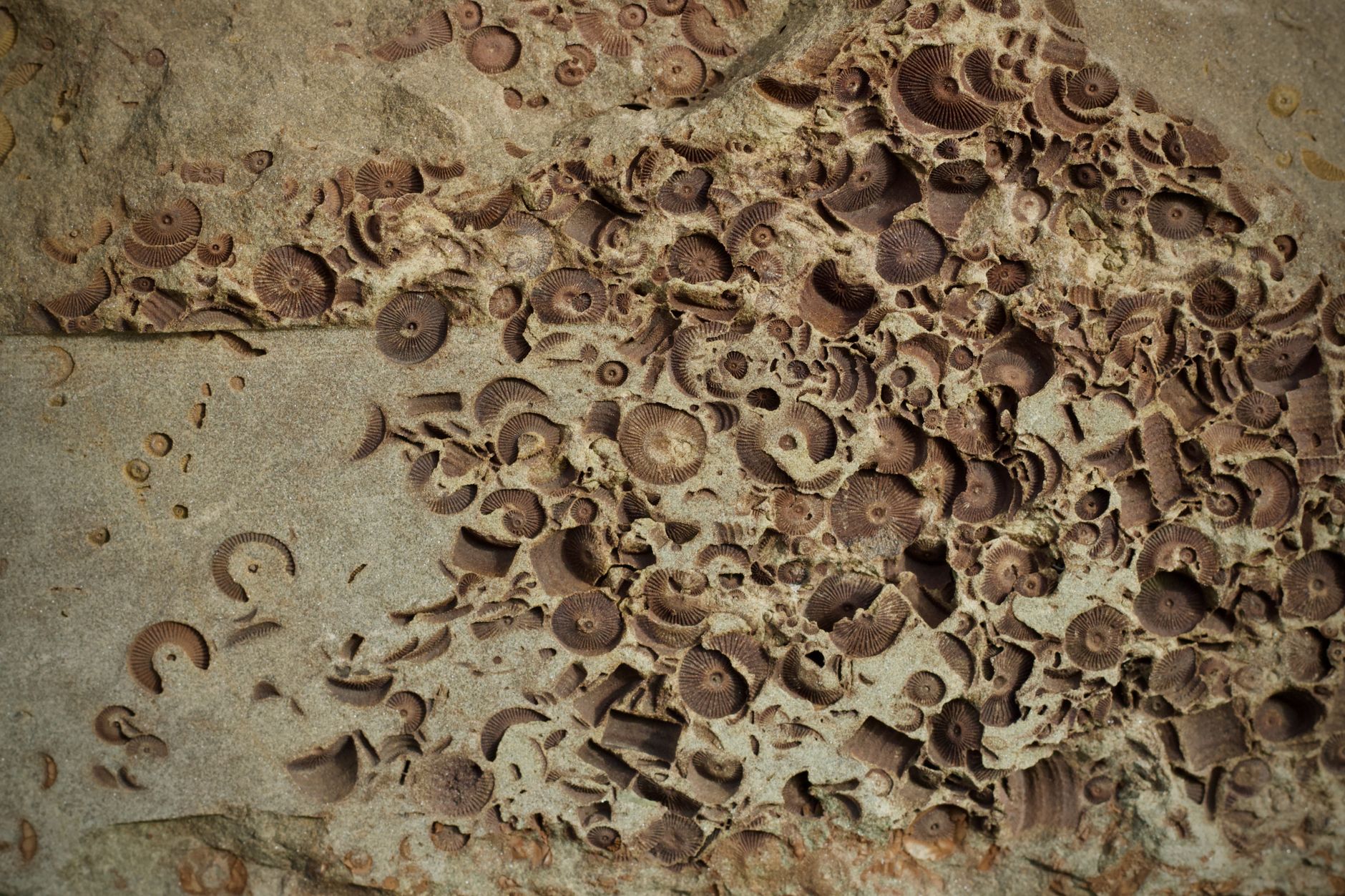
Almost everything on this page was free to whoever first picked it up. A rock lands in the Sahara. A checklist comes home in a locker. A canvas bag with grey dust in the seam is put in a box and forgotten for forty years. Value arrives later, and it arrives entirely through paperwork: who owned it, where it had been, and whether anyone can prove it.
A note on scope. Dinosaur fossils reach far higher figures than anything here and are dealt with in a separate article; this list stays with rock from space and hardware that flew. Every figure is the price as reported at the time of sale, with the house and the date.
1. NWA 16788, a Martian meteorite — about $5.3 million
Sotheby's, New York, July 2025. Nearly 25 kilograms, the largest known piece of Mars on Earth, found in the Sahara in Niger in November 2023 and exhibited at the Italian Space Agency in Rome before it was consigned. The hammer price was $4.3 million against an estimate of two to four million; fees took it to roughly 5.3. Meteorite scientists were not universally pleased.
2. Vostok 3KA-2, a Soviet spacecraft — $2,882,500
Sotheby's, New York, April 2011, on the fiftieth anniversary of Gagarin's flight. This capsule flew on 25 March 1961 with a mannequin known as Ivan Ivanovich and a dog called Zvezdochka aboard, the last rehearsal before a man was sent up. It was the only Vostok outside Russia. A Russian businessman bought it and said he intended to bring it home.
3. Buzz Aldrin's Apollo 11 jacket — $2,772,500
Sotheby's, New York, July 2022, in a sale of Aldrin's own material. A white beta-cloth inflight coverall jacket that he wore to the Moon and back. The estimate was one to two million dollars, the hammer fell at 2.25 million, and the house called it a world record for any spaceflown artefact. The sale as a whole made just over eight million.
4. Neil Armstrong's gold Robbins medal — $2,055,000
Heritage Auctions, Dallas, July 2019, from the Armstrong Family Collection. Robbins medals were struck for each crew and carried aboard; only three were made in gold for Apollo 11, one for each astronaut. It is 28 millimetres across. Until the Aldrin jacket three years later, it was the highest price paid for an object that had been to the lunar surface.
5. The Apollo 11 moonwalk videotapes — $1,820,000
Sotheby's, New York, July 2019. Three original first-generation NASA tapes of the lunar excursion, which had been sold off in a government surplus auction in 1976 and bought by a former NASA intern for $217.77. He kept them unopened for decades. They never left Earth, which is worth stating plainly, but the recordings on them are the only surviving copies of that quality.
6. The Apollo 11 lunar sample bag — $1,800,000
Sotheby's, New York, July 2017. A contingency sample bag with lunar dust still in it, used by Armstrong on the surface. It reached the open market through a US Marshals forfeiture sale in which it had been misdescribed, and was bought by a lawyer near Chicago for about a thousand dollars. NASA went to court to get it back and lost.
7. Aldrin's felt-tip pen and a broken circuit breaker — $857,600
Sotheby's, New York, July 2026, sold by the Aldrin family trust. The pen was pushed into a snapped circuit breaker on the lunar module to arm the ascent engine, which is to say that these two objects are the reason the crew left the Moon. The same lot had been offered in 2022 and failed to sell. More on that below.
8. Luna 16 lunar soil — $855,000
Sotheby's, New York, November 2018. Three tiny samples, two tenths of a gram in total, returned by the Soviet robotic probe Luna 16 in 1970 and presented to the widow of a senior designer of the programme. They are generally described as the only Moon material legally in private hands. Sotheby's had sold the same display in 1993 for $442,500.
9. Aldrin's Apollo 11 flight plan — $819,000
Sotheby's, New York, July 2022, from the same sale as the jacket. The complete flight plan, carried to the Moon and back. In the same session a lunar module activation checklist that had landed on the surface made $567,000 and Aldrin's water dispenser made $327,600. Paper that went to the Moon and came back is its own category, and a deep one.
10. NWA 11789, the Moon Puzzle — $612,500
RR Auction, Boston, October 2018. A lunar meteorite of five and a half kilograms, broken into six pieces that fit back together, which is how it got its name. It was bought on behalf of a Buddhist temple complex in Ha Nam province in Vietnam. Lunar meteorites are the cheap way to own the Moon: rock that made the journey without a rocket.
The two lots that did not sell
In April 2008 Bonhams in New York offered the main mass of the Fukang pallasite, about 420 kilograms of iron shot through with olivine crystals that glow when light passes through them. It was expected to pass two million dollars. Nobody bid enough and it went home. It is still the most famous meteorite never sold.
The second is item seven above. Aldrin's pen and circuit breaker were offered in July 2022 with an estimate of one to two million dollars. Bidding stalled at 650,000 and the lot failed its reserve, the only thing in that sale that did. Four years later, in a different room and with a different number attached, the same objects made $857,600. The lot did not change. The expectation did.
What a charity evening can take from this
Start with that pen, because it is the most useful thing on this page. A reserve set above what the room will pay does not protect the value of a lot; it removes the lot from the sale and tells everyone present that it was overvalued. If you are unsure what something is worth, set the floor low and let the bidding find the number. The guide works through how to pick opening bids for donated items.
Second, provenance is the whole product. The sample bag was worth a thousand dollars as a canvas bag and 1.8 million as a documented object. You will not have NASA paperwork, but you have the equivalent: the name of the donor, what the thing is, and what the winner actually gets. Three honest sentences per lot will do more for your total than better photographs.
Third, timing and grouping. Aldrin's material made eight million dollars in one afternoon because it was sold together, to people who had come for exactly that. If several donations share a theme, run them as a block rather than spreading them out, and let the people who want them find each other. There is more on the running order on the page for charities and galas, and the how it works page explains how late bids extend a lot rather than ending it.
You can build a lot list and rehearse the whole evening before committing to anything. Start at getting started, and the help pages cover the practical questions.
Prices as reported at the time of sale, including buyer's premium where the house stated it.
Also worth reading
Another side of the evening — on purpose, not more of the same.

Setting it up costs nothing, and you can rehearse the whole evening before you decide.
Start setting one up